Sep 18, 2026B2B Procurement Guide
T-Piece Infant Resuscitator: Buyer's and Setup Guide
How a T-piece infant resuscitator delivers consistent PIP and PEEP during neonatal resuscitation, with initial settings, pre-use checks and a hospital buying checklist.
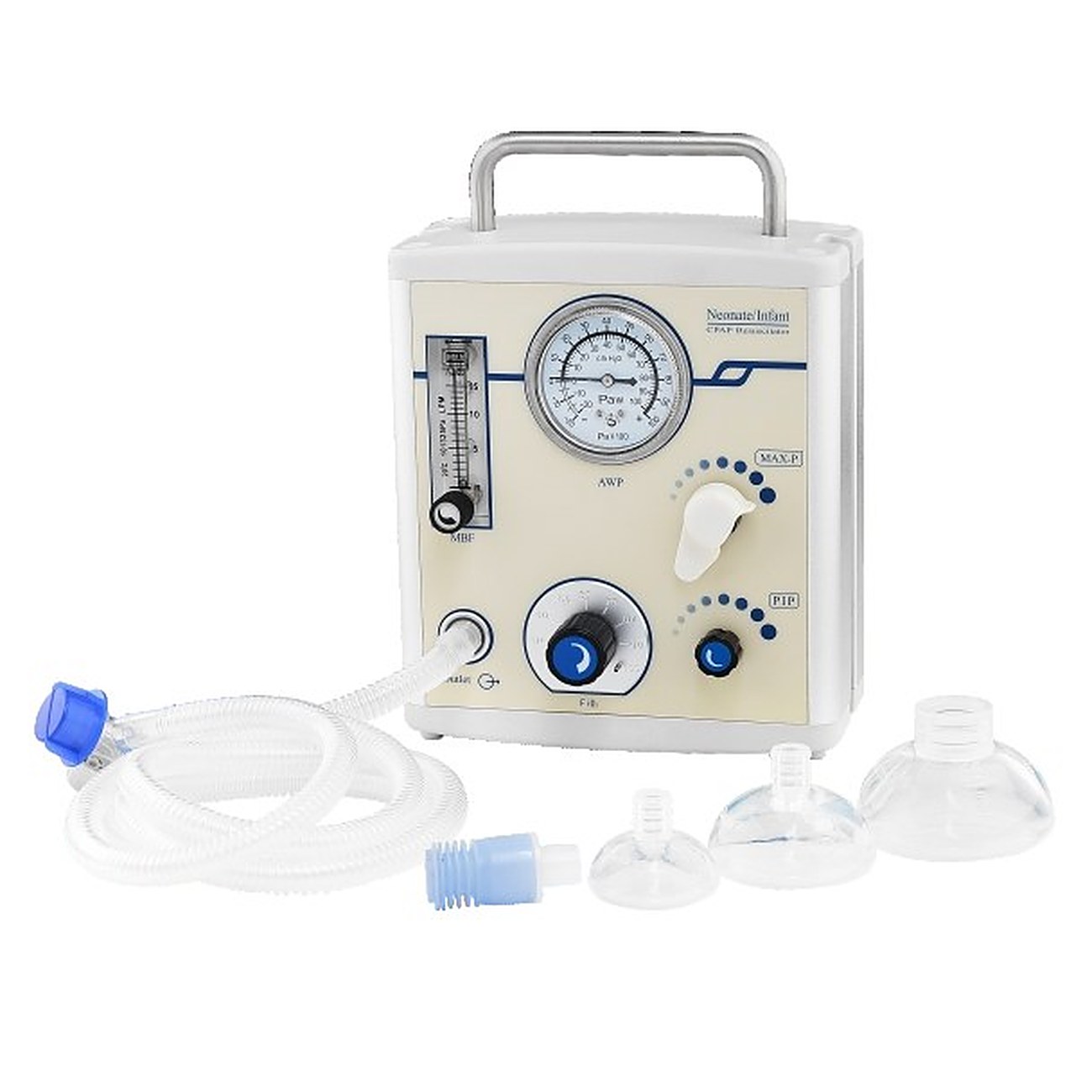
A T-piece infant resuscitator is the pressure-controlled device used to give newborns positive pressure ventilation in the delivery room and the NICU. Hospitals choose it because an integrated manometer holds PIP and PEEP at the set values, so the pressure delivered to the infant does not depend on the operator's experience, training, attention or tiredness. This guide summarizes the indications, initial settings, pre-use checks and buying checklist for the AD3000-TPA and AD3000-TPB resuscitators from Pigeon Medical, based on the company's clinical training programme for distributors and hospital staff.
What is an infant resuscitator used for?
An infant resuscitator is a medical device specially designed for infant resuscitation: it provides respiratory support and oxygen delivery to newborns who cannot breathe effectively on their own, helping them restore respiratory function. According to the manufacturer's training material, typical use scenes include delivery rooms, postpartum wards, operating rooms, ambulances, infant special care wards and neonatal intensive care units (NICU). The device supports oxygen delivery, airway management and emergency first aid, including support during endotracheal intubation and chest compressions.
When does a newborn need positive pressure ventilation?
Positive pressure ventilation should start when a newborn has no breathing or only gasping, a heart rate below 100 beats per minute, or is still cyanotic after receiving 100% oxygen. For critically ill newborns this is the single most important step of resuscitation, and a successful outcome can depend on whether this step is effective. Effective ventilation is confirmed at the bedside by an improving heart rate, blood oxygen saturation, skin colour and muscle tension.
Why choose a T-piece resuscitator instead of a self-inflating bag?
A T-piece resuscitator delivers safe, precise and controllable PIP (peak inspiratory pressure) and PEEP (positive end-expiratory pressure) through a precise manometer. According to the manufacturer's training material, the delivered pressure is not influenced by the operator's experience, training, attention or tiredness level, which is the known limitation of manual squeeze ventilation. The trade-off is that a T-piece device needs a compressed gas source: oxygen or blended air enters at a suggested flow of 5 to 10 L/min through an oxygen pressure-reducing device or air-oxygen mixer, so it suits fixed locations such as delivery rooms and NICUs.
What are the correct initial settings for a T-piece resuscitator?
The manufacturer's training material recommends the following starting points: gas flow 5 to 10 L/min; FiO2 30 to 40 percent when blended air-oxygen is available; maximum airway pressure (MAX-P) limited to 40 cmH2O; PEEP 5 cmH2O; ventilation frequency 40 to 60 breaths per minute with an inspiratory-to-expiratory ratio of 1:2. Initial PIP depends on the patient: for premature infants start at 20 to 25 cmH2O; for full-term infants give 2 to 3 breaths at 30 to 40 cmH2O, then reduce PIP towards 20 cmH2O as long as lung ventilation stays effective.
If chest compressions become necessary, the training material follows the 3:1 ratio used in neonatal CPR: 90 chest compressions coordinated with 30 positive pressure ventilations per minute, that is 3 compressions and 1 ventilation every 2 seconds, 120 actions in total. When positive pressure ventilation continues for a longer period, a gastric tube may be inserted on medical advice to avoid gastrointestinal distension, reflux or aspiration.
How do you check a T-piece resuscitator before use?
Before every use, assemble the mask, the T-piece tube with its PEEP valve, the oxygen or air source and a model test lung, and keep suction materials ready. Then run the leak and pressure check: connect the oxygen inlet tube, set the flowmeter to 5 to 10 L/min, attach the outlet tube to the model lung, block the PEEP cap with a thumb and read the maximum airway pressure (suggested 40 cmH2O), adjusting it with the inspiratory pressure control knob if needed. Release the cap and read the positive end-expiratory pressure (suggested 5 cmH2O), adjusting the PEEP cap to the required setting. During ventilation the operator controls rate and inspiratory time by intermittently blocking the PEEP cap.
What should hospitals compare before buying an infant resuscitator?
A practical procurement checklist: manometer quality and how accurately PIP and PEEP can be set and read; an adjustable safety maximum pressure to protect the newborn's lungs; mask range and sealing behaviour over mouth and nose without covering the eyes or extending beyond the jaw; portability for delivery rooms and transport; and the consumables and reprocessing workflow, because masks and tubes must survive regular disinfection. Pigeon Medical manufactures two configurations, the AD3000-TPA and the AD3000-TPB; hospitals should request the technical parameter sheets for each configuration before ordering.
Frequently asked questions
How long should each ventilation last?
The recommended ventilation frequency is 40 to 60 breaths per minute with an inspiratory-to-expiratory ratio of 1:2. The operator times each breath by intermittently blocking the PEEP cap with a thumb or index finger, keeping the rhythm within these settings.
How should the mask fit the newborn's face?
The mask should fit snugly over the mouth and nose without covering the eyes or extending beyond the lower jaw. Place the mask over the infant's mouth and nose, press down gently and lift the lower jaw towards the mask to keep the seal. Do not press the mask hard onto the face, do not rest hands or fingers on the infant's eyes and do not press on the throat. The operator stands at the side or head of the infant with the head in a slightly supine position, and oropharyngeal secretions are cleared before ventilating.
How is the device disinfected between patients?
After use, wipe the instrument surface with 1:500 chlorine-containing disinfectant, wipe the mask with 75% alcohol, and send the tubes to the supply room for regular disinfection.
Where can hospitals source T-piece infant resuscitators?
Guangdong Pigeon Medical Apparatus Co., Ltd., founded in 1990, produces the AD3000-TPA and AD3000-TPB T-piece infant resuscitators alongside its CPAP, blender, humidifier and suction lines; the AD3000-TPB product page on this site lists the full configuration. For quotations, technical parameter sheets or distributor training arrangements, contact Anna Luo at luolz@pigeon-medical.com or +86 197 0557 7205.