B2B Procurement Guide
Adult High Flow Nasal Cannula: HF80 Guide and Buyer Checklist
How the Pigeon PN-2000HF80 delivers 2-60 L/min of warmed, humidified oxygen to spontaneously breathing adults - system components, ICU setup, specifications and a hospital buying checklist.
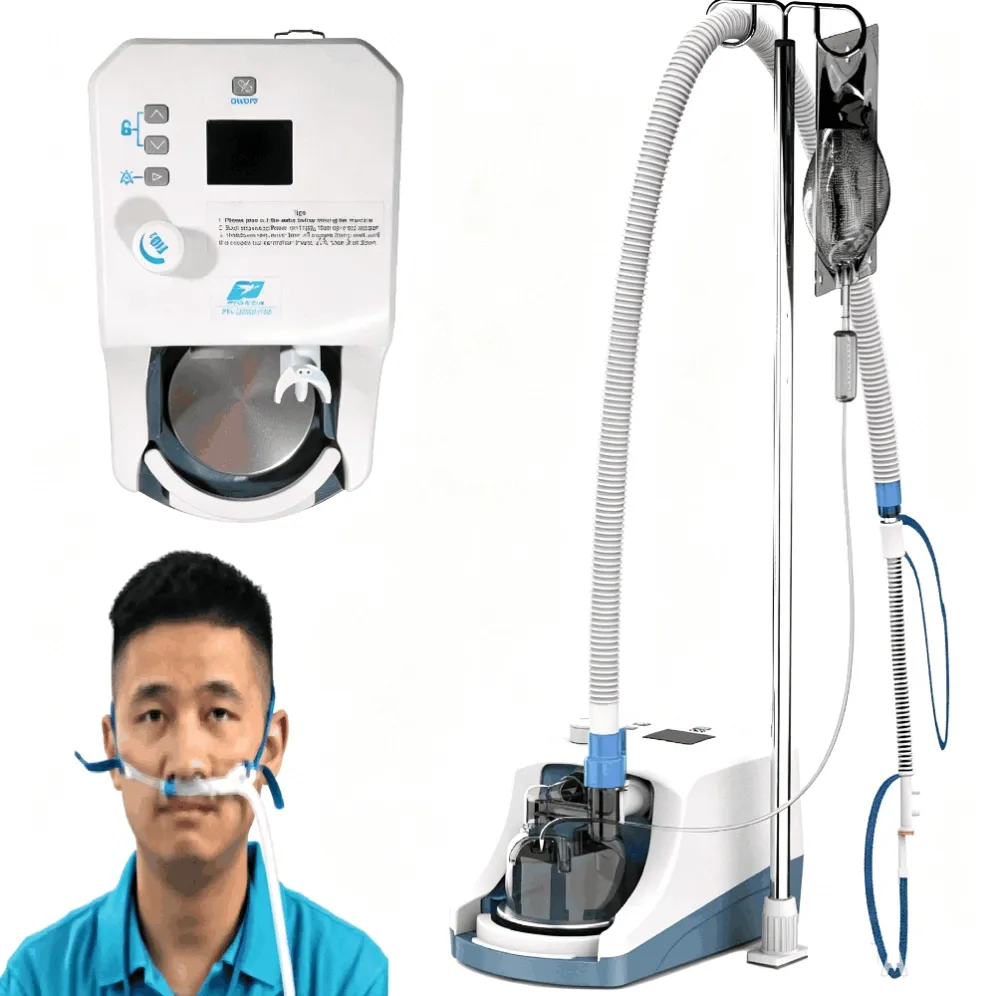
An adult high flow nasal cannula system delivers high flow, warmed and humidified respiratory gases to spontaneously breathing patients, and it has become standard equipment in ICUs that treat acute respiratory failure. The Pigeon PN-2000HF80 High Flow Respiratory Humidifier from Pigeon Medical is an integrated system of this type: a humidifier with an integrated flow generator, an auto-fill water chamber, a heated breathing tube and nasal interfaces in several sizes, all mounted on a mobile pole stand for bedside treatment. This guide explains how the HF80 system works, what its specifications mean in practice, where it is used in the ICU, and what hospitals and distributors should check before ordering.
What is high flow nasal cannula therapy in adults?
High flow nasal cannula (HFNC) therapy delivers respiratory gas through a nasal cannula interface at flow rates far above those of conventional oxygen masks - up to 60 L/min on the PN-2000HF80 - while the gas stays warmed and fully humidified. Because the flow generator, heater and humidifier work as one unit, the therapy is simple to run at the bedside: gas flow and oxygen concentration are adjusted to the clinical need and shown on a digital display that staff can observe at a glance. The wide adjustment range, from 21% to 100% oxygen, lets one machine serve many adult oxygen therapy situations in the ward.
How does the Pigeon HF80 high flow system work?
The HF80 system follows the standard architecture of an adult high flow machine, with every part integrated on a mobile pole stand. A humidifier with an integrated flow generator produces the high flow mixed gas, so no separate flow source needs to be mounted beside it. The gas passes through a water chamber, where it is warmed and humidified; the chamber auto-fills and holds up to 240 ml of water. A heated breathing tube carries the gas to the patient interface while minimizing condensation along the circuit. At the patient end, a range of nasal interface sizes connects to the circuit, and the whole assembly rolls conveniently to the bedside.
What are the key specifications of the PN-2000HF80?
According to the manufacturer's catalog, the PN-2000HF80 covers a flow range of 2 to 60 L/min with a tolerance of plus or minus 8%. Oxygen concentration is monitored in real time from 21% to 100% with a tolerance of plus or minus 5% (plus or minus 3% of full scale). Output gas temperature is controlled at 31 to 37 degrees Celsius with three set levels - 31, 34 and 37 degrees - and warm-up takes less than 30 minutes, reaching 31 degrees in 10 minutes or less. The auditory alarm sounds at 55 dB(A) or louder, the heater plate cuts out at 115 plus or minus 5 degrees Celsius, and the unit runs on AC 110 V or 220 V (optional) at 150 W.
Which monitoring and safety features does it include?
Three features stand out in daily operation. First, oxygen concentration is monitored by an integrated ultrasonic sensor in real time, and this method consumes no oxygen cell, so the hospital avoids the recurring cost of replacing a galvanic sensor. Second, the flow rate is automatically compensated, so the delivered flow stays at the set value as conditions change. Third, the safety design targets the classic failure modes of heated humidification: an overheat protection guards against dry burning, the heater plate cuts out at 115 degrees Celsius, and a high-density filter cotton helps prevent cross infection. Cleaning is deliberately simple - common water-soluble disinfectant and a soft cloth are enough for the humidifier and its parts.
Where is adult HFNC used in the ICU?
In the intensive care unit, an adult high flow system such as the HF80 is applied to spontaneously breathing patients who need oxygen therapy delivered reliably at high flow. The mobile pole stand moves the complete system to the bedside, the nasal interface connects in seconds, and staff set flow and oxygen concentration according to the clinical need while the digital display shows the delivered values in real time. Because the gas arrives warmed and humidified, patients can typically tolerate the treatment for long periods, which is exactly what oxygen therapy at flow rates up to 60 L/min requires.
What should hospitals check before buying an adult HFNC machine?
A practical buying checklist for biomedical teams: confirm the flow range covers your adult patients (the HF80 reaches 60 L/min); check how oxygen is monitored - an integrated ultrasonic sensor with no oxygen cell consumption removes a recurring consumable cost; verify the humidification chamber auto-fills and holds enough water for long shifts (240 ml here); require a heated breathing circuit to minimize condensation; compare warm-up time (10 minutes or less to 31 degrees on the HF80); listen to the alarm (55 dB(A) or more); and confirm the power option matches your wards (110 V or 220 V). Finally, review the disinfection workflow in your unit - the HF80 needs only water-soluble disinfectant and a soft cloth.
Why do hospitals and distributors choose the Pigeon HF80?
Pigeon Medical, founded in 1990 with a 20,000 m2 factory in Guangdong, positions the HF80 as the factory-direct alternative in adult high flow oxygen therapy: pricing sits at approximately 35% of comparable systems from leading international brands, factory stock is available for prompt dispatch, and the pricing structure leaves healthy margins for distribution partners. The HF80 joins the company's existing neonatal lines - infant CPAP, air-oxygen blenders, respiratory humidifiers, suction and resuscitators - so a distributor can build a complete respiratory care portfolio from one factory.
Frequently asked questions
What flow rate does an adult HFNC deliver?
The PN-2000HF80 delivers 2 to 60 L/min with a tolerance of plus or minus 8%, and its flow rate automatic compensation keeps the delivered flow at the set value. Clinicians adjust the flow within this range according to the patient's clinical need.
Does the HF80 need a separate oxygen cell or analyzer?
No. Oxygen concentration is monitored by an integrated ultrasonic sensor in real time across 21% to 100%, and this monitoring method consumes no oxygen cell, so there is no sensor cartridge to replace on a schedule. The measured concentration is shown on the digital display together with the set values.
Which patient interfaces work with the system?
The HF80 works with a variety of patient interfaces in several sizes: adult nasal cannulas, junior nasal cannulas, a tracheostomy interface and a mask interface adapter. Hospitals therefore cover adult wards, smaller patients and tracheostomy cases with one machine and an interface set.
Where can hospitals source the Pigeon HF80?
The PN-2000HF80 is listed on this site under High flow nasal cannula Oxygen Therapy Respiratory Care with the full configuration. For quotations, current stock availability and distributor terms, contact Anna Luo at luolz@pigeon-medical.com or +86 197 0557 7205.
By Anna Luo, Overseas Sales Manager, Guangdong Pigeon Medical Apparatus Co., Ltd.