Neonatal Care
Heated-Wire Humidification for Infant CPAP
What servo-controlled heated-wire humidification does, how to read invasive and non-invasive temperature targets, and which models pair with AD CPAP.

Every nasal CPAP circuit delivers gas continuously through nasal prongs, which makes active humidification part of the therapy rather than an accessory. This guide explains what servo-controlled heated-wire humidification does, how to read the temperature tables on a datasheet, and which humidifier models pair with the Pigeon AD series CPAP.
Why CPAP circuits need active humidification
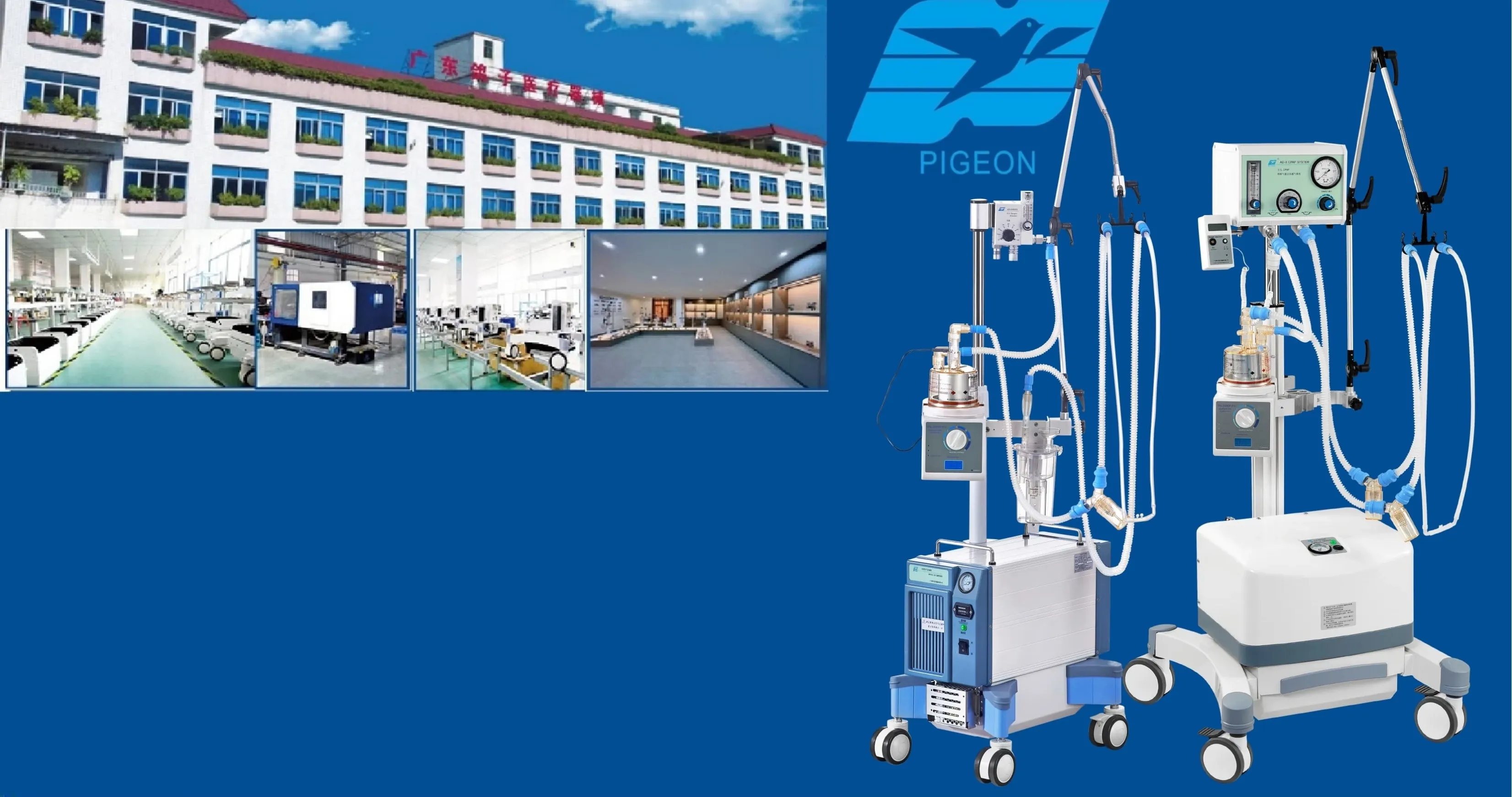
Nasal CPAP delivers gas continuously through prongs, so the gas reaching the patient must be warmed and humidified along the way. That is why Pigeon specifies a heated humidifier as standard equipment on its AD series CPAP: the PN-2000F ships as standard with the AD-I and AD-II, with the PN-2000FB and PN-2000FC850 as options.
What servo control adds on the PN-2000FB
The PN-2000FB uses a heated wire with servo control and a double temperature sensor. In heated-wire mode it offers three settings - P1 at 25-29 °C, P2 at 29-35 °C and P3 at 35-39 °C. Servo control means the unit regulates output against what it measures rather than running open-loop, which is what keeps delivered gas stable as room conditions and flows change. The unit is rated 220VA on AC220V/110V at 50-60Hz. In practice the units map simply: the highest setting suits invasive circuits, the middle setting suits non-invasive face-mask CPAP, and the lowest suits home or step-down CPAP - each stage preheats in under 30 minutes.
Invasive and non-invasive temperature targets
The PN-2000FC850 documents two distinct target sets. In non-invasive mode the chamber outlet runs at 31-36 °C with airway temperature at 34 °C ±2 °C. In invasive mode the chamber outlet runs at 37-42 °C with airway temperature at 40 °C ±2 °C. Reading these two sets of numbers - and which mode they belong to - is the most important part of comparing humidifier specifications.
Checking compatibility before you buy
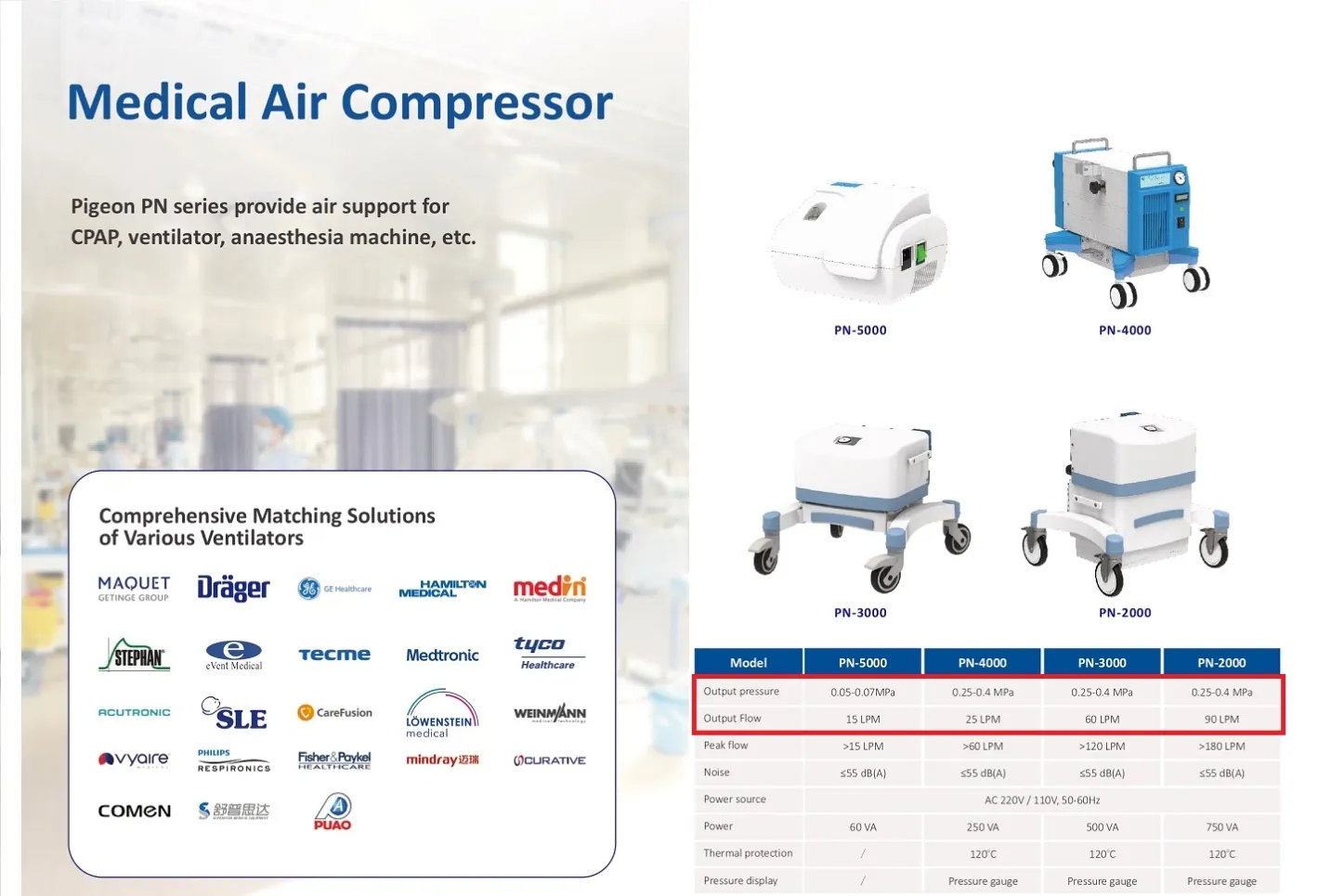
The PN-2000 family pairs with the heated-wire circuits and temperature probes listed in the Pigeon accessories range. Because the AD series CPAP, the PN-2000 humidifiers and the PN series compressors are documented together, matching a full respiratory set from one specification sheet is straightforward.
Next step
If you are evaluating neonatal respiratory equipment for your unit or distribution portfolio, the team at Pigeon Medical can share full specification sheets and configuration options - reach us through the contact form on this site or via the email and phone listed on the Contact Us page.