Sep 17, 2026Neonatal Care
Bubble CPAP for Neonates: How It Works
How a bubble generator sets CPAP pressure, which infants benefit, and the datasheet numbers that matter when evaluating a bCPAP device.
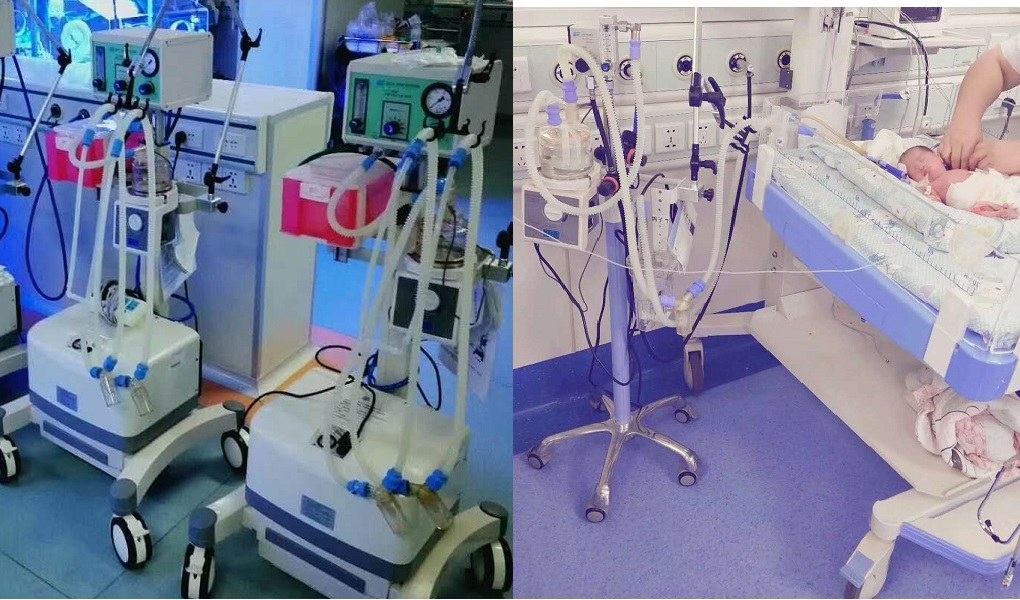
Bubble CPAP is one of the most widely used forms of non-invasive respiratory support for newborns, yet the specifications behind a bCPAP device are often compared only on price. This guide explains how bubble CPAP generates pressure, which patients it suits, and which numbers on a datasheet actually matter.
What nasal CPAP does for a spontaneously breathing infant
Nasal continuous positive airway pressure (NCPAP) is a form of positive airway pressure ventilation delivered through nasal prongs to keep the airways continuously open in infants who are able to breathe spontaneously. The Pigeon AD series is committed to respiratory care for premature, neonate and pediatric patients, and is widely applied in ICU, NICU and PICU settings.
How a bubble generator sets CPAP pressure
In the bubble CPAP configuration, pressure is generated by a bubble generator rather than a mechanical valve. The AD-I works this way: the clinician adjusts CPAP pressure by changing the underwater column depth of the bubble generator, in a range from 3 to 10 cmH2O. The chamber is made of PC material, is reusable and unbreakable with overflow protection, and can be removed for cleaning without disturbing CPAP.
Specifications to compare when evaluating a bCPAP device
The AD-I blends air and oxygen across 21%-100% FiO2 at plus or minus 3 percent accuracy, delivers CPAP at 3-10 cmH2O, and runs a flow of 2-18 LPM on an air and oxygen supply at 0.3-0.4 MPa. Its AD-IA sibling runs on an oxygen supply with a flow of 1-10 LPM. Both pair with the PN-2000F humidifier as standard, with PN-2000FB and PN-2000FC850 optional.
From bubble CPAP to multi-mode units
Where a unit needs CPAP without a bubble generator, the AD-II generates nasal CPAP through a built-in CPAP valve. Further up the family, the AD-V combines built-in flow generation and blending with multiple therapy modes - neonatal CPAP, pediatric CPAP, and HFNC - with digital setting and measurement of pressure, flow and FiO2, so one device can follow the patient across escalation steps.
Next step
Tell us your patient range and gas supply through the contact form, and our team will recommend the right AD series configuration.