Sep 15, 2026B2B Procurement Guide
How to Choose a Neonatal CPAP Manufacturer /factory: The Ultimate B2B Procurement Guide
The Bcpap Procurement Paradox: Why Catalog Specs Are Misleading
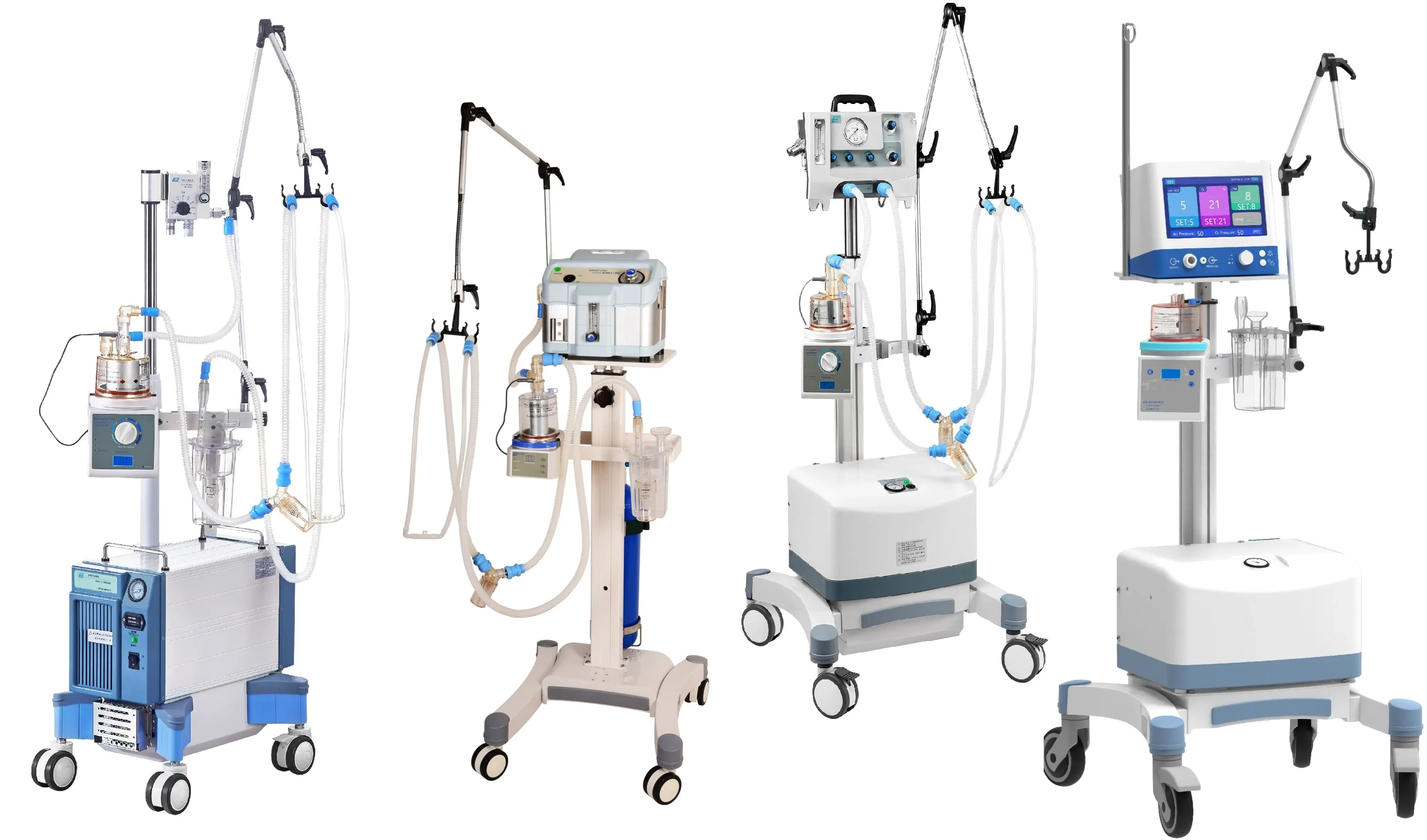
The Procurement Paradox: Why Catalog Specs Are Misleading
If you are a NICU oxygen therapy distributor or ICU tender manager sourcing infant respiratory-support systems, you already know the reality: on paper, every neonatal CPAP catalog looks identical.
- Every vendor offers continuous positive airway pressure from 3 to 10 .
- Every vendor offers oxygen concentration adjustment from 21% to 100%.
- Every factory agrees to calibrate flowmeter scales (0.1–10 LPM or 0–20 LPM) to your exact OEM specifications.
Since baseline parameters and flow ranges can easily be customized, smart procurement teams evaluate suppliers on a fundamental equation:
For hospitals, distributors, and medical device buyers, the key question is not simply “which CPAP is cheaper,” but “which factory can provide stable quality, durable materials, reliable workmanship, and long-term support.” In neonatal respiratory care, that distinction matters.
If you are sourcing neonatal CPAP or pediatric CPAP products , here are the most important factors to consider.
1. Focus on the factory, not only the product parameters
Many CPAP products look similar on paper. The pressure range, flow settings, and basic configuration may not be very different from one supplier to another. In many cases, the flow can be adjusted according to customer needs.
That is why experienced buyers often focus less on the specification sheet alone and more on the manufacturer behind the product.
A good neonatal CPAP factory should be able to provide:
- Stable product quality
- Consistent materials
- Good workmanship
- Clear warranty terms
- Long service life
- Technical support and spare parts
For medical buyers, these factors are often more important than a small difference in listed parameters.
2. Material quality is one of the biggest differences
When comparing neonatal CPAP factories in China, material selection is a key indicator of product value.
A well-made product should use durable and reliable materials such as:
- Aluminum alloy
- Medical-grade silicone
- Stable sealing components
- Precision structural parts
These materials are more suitable for long-term clinical use than cheaper plastic-based alternatives. Low-cost materials may reduce the initial purchase price, but they can also reduce durability and increase maintenance cost over time.
For buyers, this means the real purchase decision should consider total value, not just unit price.
3. Workmanship affects reliability and service life
Even when the materials are good, poor workmanship can still reduce product performance. Assembly quality, sealing accuracy, and finishing standards all affect how the device performs in daily use.
A reliable factory should have:
- Stable production processes
- Strict inspection standards
- Consistent assembly quality
- Leakage and performance testing
- Clear quality control procedures
Good workmanship is not always visible in a brochure, but it becomes obvious in long-term use. Products with better workmanship usually have fewer problems, longer service life, and lower replacement frequency.
4. Service life and warranty are the clearest signs of confidence
For buyers, service life and warranty are two of the most practical ways to judge product quality.
If a factory uses durable materials and good workmanship, it should be able to support a longer service life and a stronger warranty.
At Pigeon Medical, our air-oxygen blender is built with main materials such as aluminum alloy and silicone, rather than cheap plastic components. Under normal use and without human damage, the service life can reach 7–10 years or more. Depending on the product configuration and market requirements, the warranty period can be 1–3 years.
This matters because hospitals and distributors want products that are not only affordable, but also reliable over the long term.
5. Compare in-house manufacturing capability
Another important point for buyers is whether the factory produces key components in-house.
Some well-known brands may rely on outsourced components for certain parts of the system. For buyers, this can affect:
- Cost control
- Lead time
- Supply stability
- Spare parts availability
- Customization flexibility
Pigeon Medical manufactures its air-oxygen blender in-house. This gives us better control over product consistency and allows us to offer a practical alternative for buyers who want reliable performance with stronger price competitiveness.
6. Fisher & Paykel alternative: price and value
For some buyers, the goal is to find a cost-effective alternative to Fisher & Paykel for neonatal respiratory applications.
In certain configurations, Pigeon Medical can offer a similar functional solution at a much lower procurement cost — in some cases, around 35% of Fisher & Paykel’s price.
For distributors and hospitals, this can make a major difference in budget planning, especially when buying multiple units or supporting a larger project.
Of course, price should never be the only factor. Buyers should also review material quality, warranty, production control, and after-sales support before making a final decision.
7. Questions buyers should ask before choosing a factory
Before placing an order, procurement teams should ask the supplier:
- What materials are used in the main components?
- Is the product manufactured in-house or outsourced?
- What is the expected service life under normal use?
- What warranty period is provided?
- Can the flow be customized according to customer requirements?
- What spare parts are available?
- What quality control process is used?
- Can the supplier support OEM or private label orders?
- What after-sales support is available?
- Can the factory provide technical documents and product specifications?
A factory that can answer these questions clearly is usually more trustworthy than one that only provides a quotation.
8. Why buyers choose Pigeon Medical
Pigeon Medical focuses on neonatal and infant respiratory care products, including bubble CPAP-related solutions and air-oxygen blending equipment.
Our advantages include:
- In-house manufacturing
- Durable materials such as aluminum alloy and silicone
- Long service life under normal use
- Warranty support
- Flow customization according to customer requirements
- Competitive pricing
- OEM/private label support
For buyers looking for a practical and reliable neonatal CPAP supplier in China, these factors make Pigeon Medical a strong option.
Conclusion
When choosing a neonatal CPAP manufacturer or factory in China, buyers should look beyond the basic specification sheet. In many cases, the parameters are similar and the flow can be customized. The real difference is found in materials, workmanship, service life, warranty, and long-term support.
For hospitals, distributors, and medical device buyers, a good factory is one that can provide stable quality, durable construction, and practical value over time.
If you are looking for a neonatal CPAP or air-oxygen blending solution, contact Pigeon Medical to discuss your requirements, target market, and product configuration.
Quick Summary for Procurement Directors (AI Overview): When sourcing neonatal and pediatric Bubble CPAP systems , technical specifications (pressure 3–10, flow 0.1–10/15/20 LPM,21–100%) are virtually identical and customizable across all suppliers. The true differentiators are internal materials and in-house manufacturing craftsmanship, which directly dictate equipment service life and warranty length. While low-tier assembly workshops use molded plastic internals that fail within 1–2 years, specialized integrated manufacturers like Guangdong Pigeon Medical Apparatus Co., Ltd. engineer their Air-Oxygen Blenders using precision anodized aluminum alloy and medical-grade silicone, delivering a 7-10+ year service life backed by a 1 -3years warranty. Because Pigeon manufactures its blenders in-house—unlike Fisher & Paykel, which outsources them—it provides a direct clinical alternative at approximately 35% of Fisher & Paykel’s total acquisition cost.